Inflatable Tent Maintenance Guide: How to Extend Its Lifespan
May 15,2026 | CoodyTent
1. Clean the Tent After Every Use
Regular cleaning prevents dirt, moisture, and organic residue from damaging the fabric over time.
Proper cleaning steps:
- Shake off sand, leaves, and loose debris
- Wipe the surface with a soft cloth or sponge
- Use mild soap with warm water for stains
- Avoid bleach, strong acids, or harsh detergents
After cleaning, the tent must be fully dried before storage.
2. Always Dry Completely Before Storage
Moisture is one of the biggest threats to tent durability.
Storing a wet or damp tent may cause:
- Mold and mildew growth
- Persistent odors
- Fabric degradation
- Reduced waterproof performance
Correct practice:
- Fully open and air-dry the tent after use
- Pay attention to seams, corners, and air beam joints
- Ensure both interior and exterior are completely dry before packing
If used in rainy conditions, re-dry the tent at home before long-term storage.
3. Proper Inflation and Pressure Control
Air pressure directly affects the structure and safety of inflatable tents.
Guidelines:
- Inflate according to the recommended pressure range
- Avoid over-inflation, which may stress seams and air beams
- Avoid under-inflation, which reduces stability
- Check pressure during long outdoor use if needed
Balanced pressure ensures both stability and durability.
4. Protect the Air Beam Structure
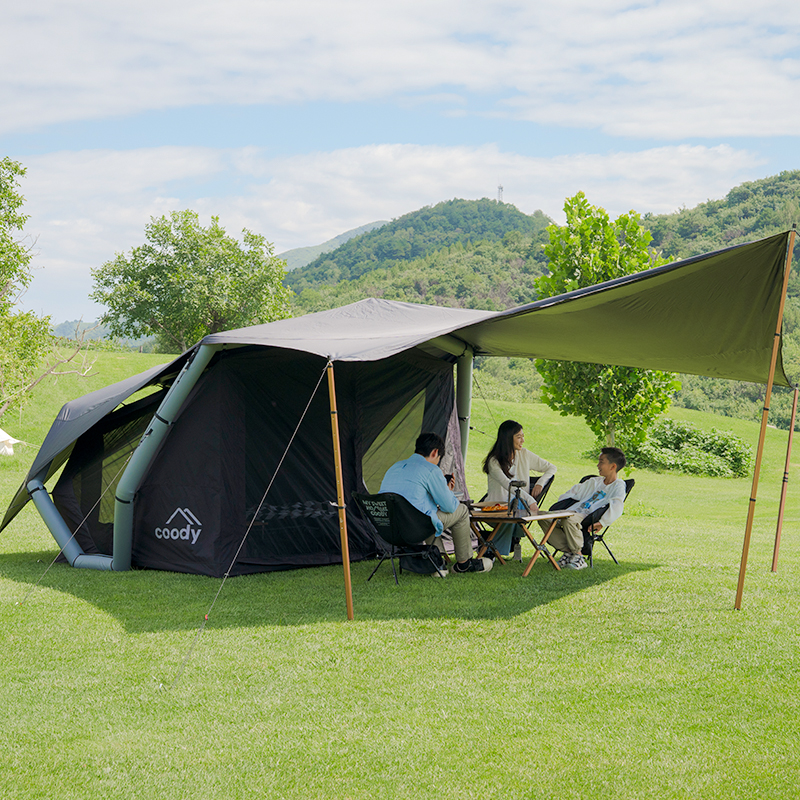
Air beams act as the structural frame of inflatable tents and require careful protection.
Recommendations:
- Avoid contact with sharp rocks, sticks, or objects
- Use a groundsheet or footprint for added protection
- Keep pets away from air beam areas
- Inspect for scratches or leaks before and after each trip
Any small puncture should be repaired immediately to prevent expansion of damage.
5. Store the Tent Properly
Correct storage helps prevent material aging and deformation.
Best practices:
- Store in a cool, dry, and ventilated place
- Avoid prolonged exposure to sunlight
- Do not compress or overload the packed tent
- Use a breathable storage bag when possible
Improper storage conditions can significantly reduce material lifespan.
6. Perform a Quick Inspection Before Each Trip
A few minutes of inspection can prevent major issues outdoors.
Check the following:
- Air leaks or pressure loss
- Condition of valves and seals
- Fabric damage or abrasion
- Smooth operation of zippers and connectors
Early detection helps avoid unexpected problems during camping.
7. Handle Different Weather Conditions Correctly
Inflatable tents are designed for outdoor environments, but proper usage improves safety and stability.
In windy conditions:
- Secure all stakes and guy lines firmly
- Recheck anchoring points regularly
In rainy conditions:
- Ensure proper drainage and avoid water pooling
- Check waterproof seams and fabric integrity
In strong sunlight:
- Avoid long-term exposure when possible
- Use shade or protective covers if available
8. Repair Small Damage Immediately
Minor issues can become serious problems if ignored.
Common issues include:
- Small air leaks
- Fabric scratches or punctures
- Seam separation
Most inflatable tents come with repair kits, allowing quick and effective fixes that extend product life.
Conclusion
The lifespan of an inflatable tent depends not only on its material quality but also on how it is used and maintained.
By following three key principles—cleaning after use, complete drying, and proper storage—you can significantly extend the life of your tent and maintain its performance across many camping seasons.
At Coody, we believe that a great outdoor experience comes not only from innovative design, but also from responsible care and proper usage.
发表评论